Teaching children Turkish proverbs and idioms
How to introduce Turkish proverbs and idioms to a child growing up abroad: age-based examples with English meanings and 5 short activities for home.

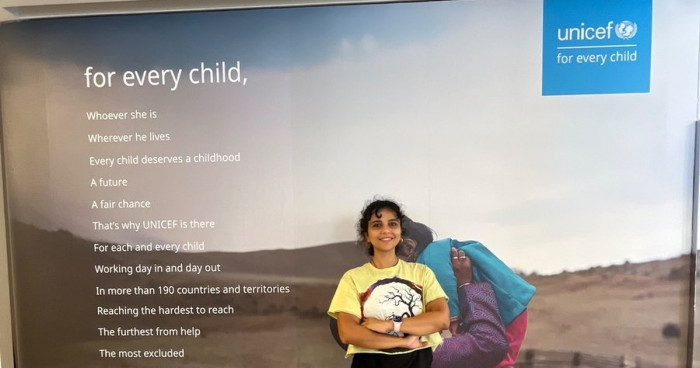
Our founder, Gamze Beyaz, visited UNICEF's Global Shared Services Centre in Budapest. We went looking for one thing: the place where the principles of an organisation working for children in every corner of the world meet the lessons we give to children of the diaspora.
At the entrance, lines written across a large photograph greet the visitor. The first is short and firm: "for every child". The ones that follow move slowly, like a poem: whoever they are, wherever they live, every child deserves a childhood, a future and a fair chance.
These two articles help us think about the bond with language and culture as a child's right to take part, not as something missing. Turkish can open new ways to talk with people who live in different places, to share stories and to get to know Türkiye's wide cultural heritage. Family closeness does not depend on using a single language. Our aim is to make room for Turkish in a child's daily life without devaluing the other languages they know or the cultures they live in.
Full text of the Convention on the Rights of the Child: Articles 29 and 30.
Next to the work UNICEF carries out in the hardest corners of the world, the scale of what we do is small. But in the world of a child growing up between two languages, those 25 minutes of feeling understood in their own language are not small at all.
Editorial note: Last content update: 28 October 2026. This article offers general information for families; it does not replace individual educational, developmental or health advice.
How to introduce Turkish proverbs and idioms to a child growing up abroad: age-based examples with English meanings and 5 short activities for home.
Easy Turkish riddles with answers and English meanings for children growing up abroad, plus age tips and a simple pattern for making their own.
Short, easy and funny Turkish tongue twisters for children growing up abroad, with English meanings, age tips and 5 ways to turn them into a game.
Choose a teacher and plan a gift intro lesson, or talk with our education team first.