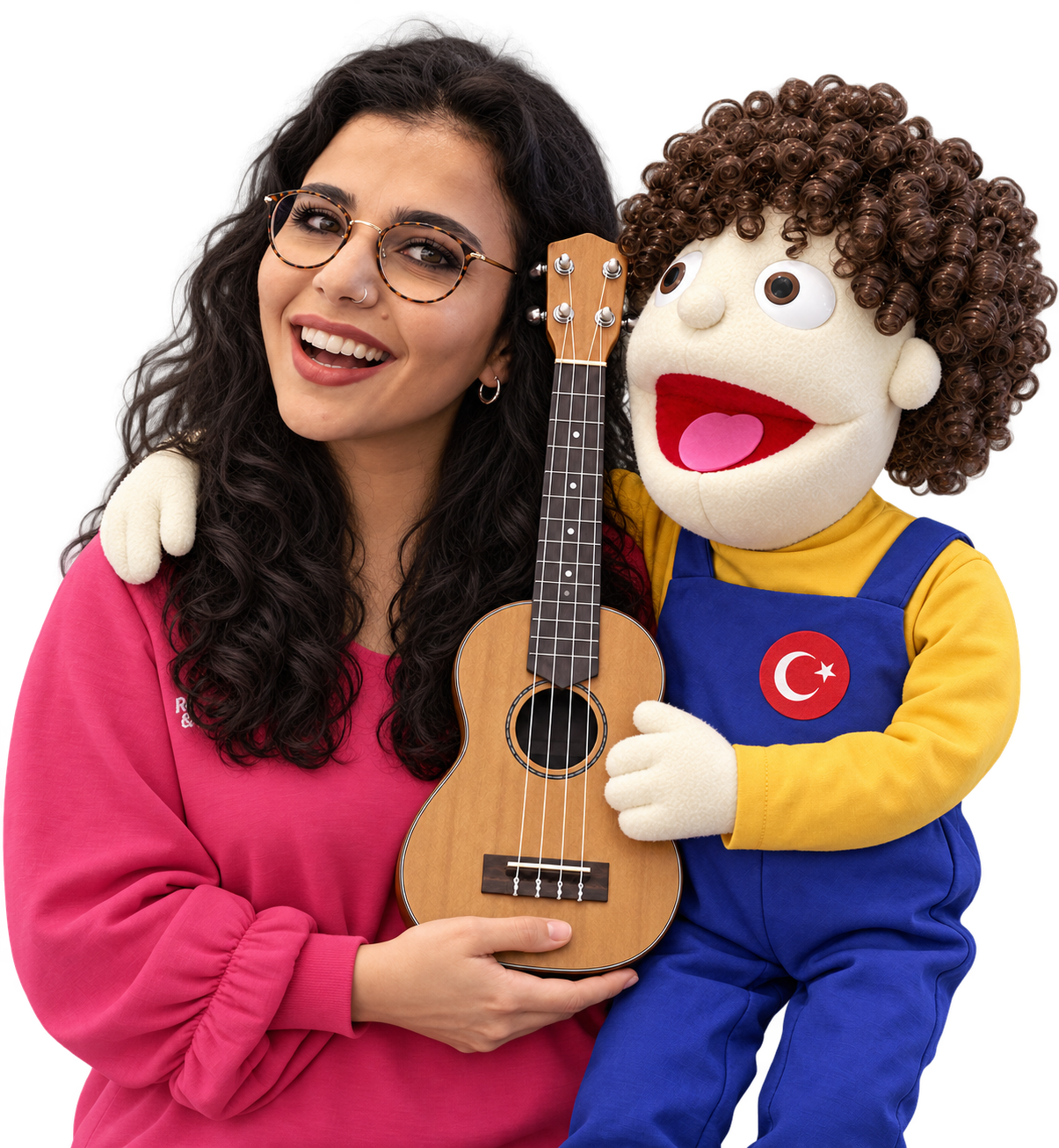
Turkish in their own words
Turkish for ages 14–17
Teenagers come to Turkish in different ways: family conversations may feel familiar while reading is new, or the language itself may be a new beginning. Content should respect both experience and age.
Begin with genuine interests
Film, music, sport or everyday life can provide material for communicating in Turkish. Activities can make space for a teenager to explain a personal choice and listen to another perspective.
- Discuss the advantages and drawbacks of a suggestion
- Explain the main idea of a short text in their own words
- Prepare a question and a counterexample for an opinion

Consider age and language experience separately
A teenager beginning Turkish can still work with age-appropriate topics. Discuss speaking, listening, reading and writing experience without assuming that all four have the same starting point.
A suitable teacher and shared expectations
Check the age groups on a teacher’s profile before starting. For ages 16–17 in particular, ask our education team if suitability is not listed; our overall age range does not mean every teacher works with every age.
What families wonder at this age
Can a teenager start from zero?
You can share their current experience with Turkish and their interests. A suitable teacher and starting activities can be discussed before the intro lesson.
Can they suggest their own topics?
It is useful to share interests and topics they would like to discuss. Lesson content considers those preferences alongside current language needs.
Does a parent need to attend?
A parent needs to be reachable. Adult responsibilities for the lesson account, technical preparation and getting started still apply.
Let’s talk!
Take the first step for your child
Discuss your questions about lessons or teacher choice with our education coordinator, or go straight to an intro lesson.