When there is something to say
Turkish for ages 12–13
Turkish can be more than a language for answering adults’ questions. It can also give your child ways to ask about their interests and explain a point of view of their own.
Include your child in choosing topics
A book, game, environmental topic or school experience draws on different language skills. Leaving room for choices in sample activities helps the teacher understand what your child wants to communicate.
- Recommend a book or game with a short reason
- Read two opinions and explain a personal view
- Retell an everyday event from another person’s perspective
Beginning Turkish does not mean younger content
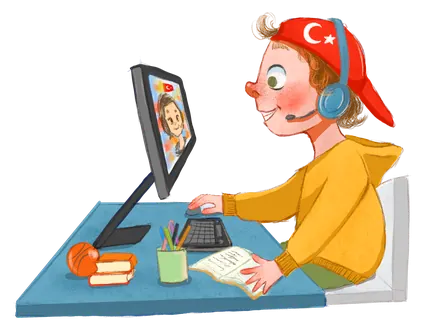
A child beginning Turkish still needs topics that fit their age. Short sentences and visual support can make a topic accessible without relying on material intended for younger children.
Connecting with family
Asking about a family story or discussing something watched together can provide a starting point outside lessons. Leave room for your child’s choices without requiring them to discuss personal subjects they would rather keep private.
What families wonder at this age
What if my child speaks but finds longer explanations difficult?
Share concrete examples with the teacher. Sequencing events, connecting sentences or giving a reason for an opinion can become separate areas to work on.
Can writing be considered separately from speaking?
Yes. Reading and writing experience can be discussed separately when considering the starting point. Children of the same age may use Turkish in different ways.
Does a parent need to sit beside them?
At this age, a parent needs to be reachable. An adult remains responsible for preparing the camera, sound and connection.
Let’s talk!
Take the first step for your child
Discuss your questions about lessons or teacher choice with our education coordinator, or go straight to an intro lesson.