Turkish on family visits: small steps that give your child a voice
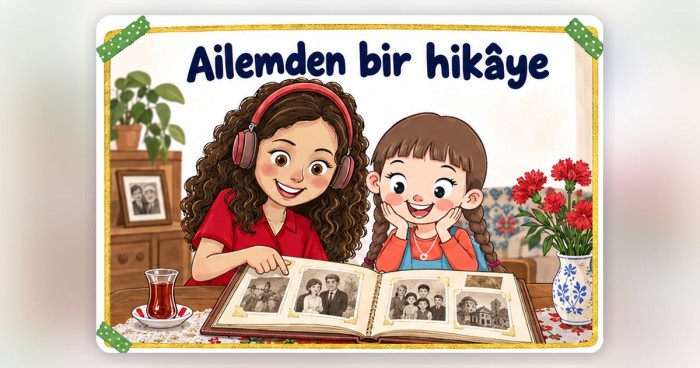
A visit to grandparents or relatives can be one of the best Turkish moments of the year. It can also turn into a test, with everyone asking the child to "say something in Turkish". A little preparation helps the conversation feel natural.
Talk to the adults before the visit
Agree with the adults beforehand that nobody will quiz your child in front of others. Ask them to talk with your child about something, rather than ask them to perform. One relaxed exchange is worth more than ten quiz questions.
Choose something to do together
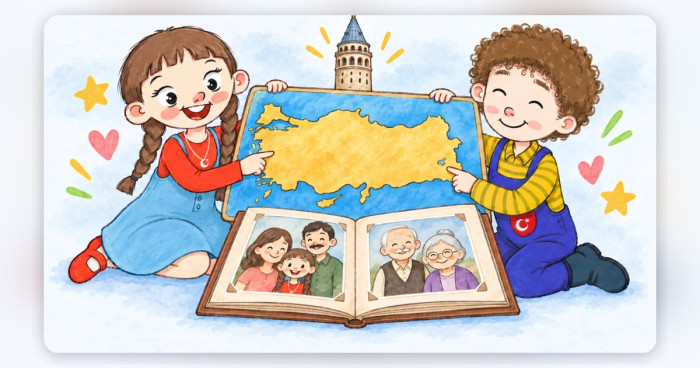
Children speak more easily when their hands are busy. Setting the table, choosing a plant at the market, cooking a simple dish or looking at old family photos all give a reason to talk. The task carries the conversation; the language follows.
Adapt the same idea to different ages
- Ages 4–6: naming and counting things during the task ("How many plates do we need?").
- School age: small choices and explanations ("Which one should we buy, and why?").
- Ages 13–17: a real role, such as helping a grandparent with their phone or planning an outing.
If they don't want to answer in a crowd
Let it go in the moment. Many children are quieter with lots of people around. Come back to the topic later, one to one, or let them answer in their own way. Understanding still counts.
Talk about what they remember when you get home
After the visit, talk about one shared memory: a meal, a joke, a place. Retelling it in Turkish helps the words stick.
A little preparation is enough
You don't need a plan for every minute. One agreement with the adults and one shared task are often enough.
More ideas: Turkish video call games with grandparents · A 15-minute home routine · Turkish resources for families
Continue from here
Turkish conversation with picture books: look together before you read
How to turn a picture book into a Turkish conversation: choosing the book, looking at the pictures and short dialogue ideas. A flexible start for families of 4–10 year olds.
Take the first step for your child
Choose a teacher and plan a gift intro lesson, or talk with our education team first.